
Interview with Assoc. Prof. Milan Jakubek
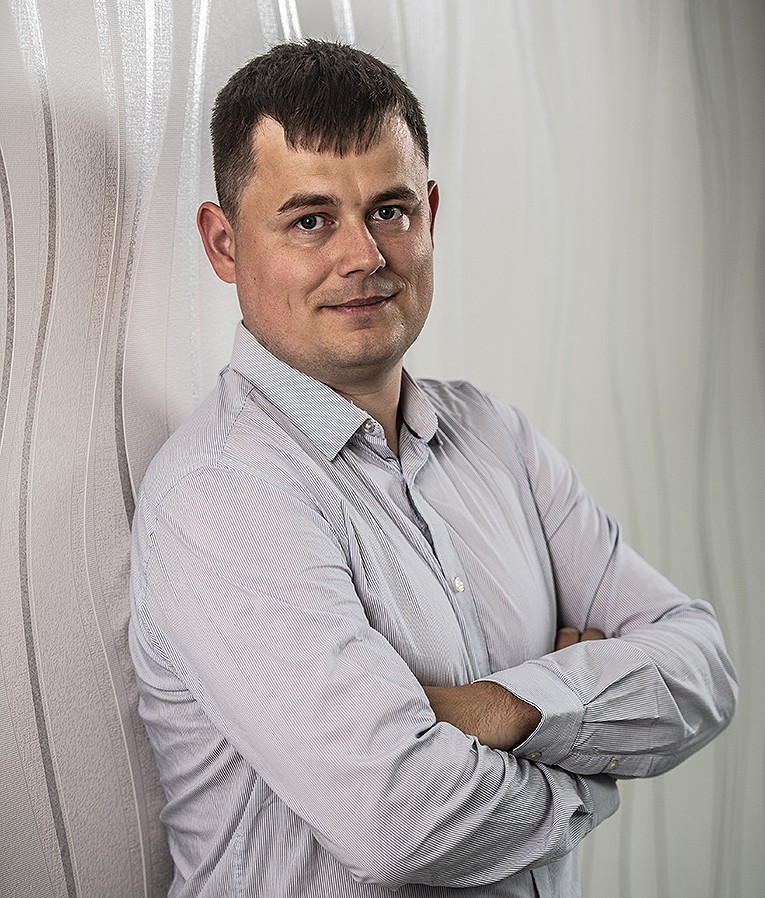
Assoc. Prof. Milan Jakubek, head of BIOCEV at the First Faculty of Medicine, Charles University, is responsible for the preparation, formulation, and biological evaluation of proton and neutron therapy sensitizers within the NuCapCure project. Trained as an organic and analytical chemist, Jakubek has expanded his work over the past nine years into medicinal chemistry and molecular biology. His expertise includes the design and investigation of theranostics for mitochondrial targeting, nanoformulated drugs, and the development of proton and neutron therapy sensitizers, which represent a central focus of the NuCapCure project.
- What puzzle are you solving in glioblastoma through NuCapCure?
While other colleagues focus on what the NuCapcure molecules should do, our primary goal is the design and synthesis of the “ideal” molecules. So, we are at the beginning of the long journey to the novel compounds for the treatment of glioblastoma. We know that the journey is not easy, it has many blind turns.
- Give us a kitchen-table analogy for “tumour-directed” chemistry.
In this project, the structural motifs of the planned compounds contain groups that preferentially accumulate in the tumour. Additionally, these compounds are not active on their own; they must be activated, and the activation beams.
- Without revealing formulas, what 2–3 qualities make a molecule “promising” to you?
A promising molecule must exhibit high selectivity for tumour tissue, demonstrate significant uptake across the blood-brain barrier (BBB), and show low selectivity for normal (healthy) tissue, along with a high cytotoxic effect after activation inside tumour tissue.
- NuCapCure uses protons and neutrons to trigger the destruction of the tumour cell from the inside out. What makes a good trigger from a chemist’s perspective in simple terms?
A good trigger must be an effective acceptor of protons and/or neutrons and should produce a highly destructive species. There are several points that must be achieved to obtain a good therapeutic agent, for example negligible toxicity to healthy tissue, high accumulation in tumour and high activity and effectivity after activation by particle beams.
- How does feedback from the biology/imaging teams change your design?
Feedback from these teams leads to a better understanding of the relationship between structure, activity and function. It provides insights on how to modify the molecular design to achieve the desired functionality.
- What’s a common misconception about “disruptive” cancer chemistry you’d like to fix?
A common myth is that miracle treatments for cancer exist. In the case of cancer, the approach “Take a pill and everything will be OK” doesn’t work (yet). In reality, cancer is a very complex disease and its treatment is difficult with a variety of side effects. Progress in the development of effective cancer treatments is made through small steps.
- Moment of truth: describe the test/result that tells you a design idea is worth keeping, and one that tells you to move on.
Biology teams give us feedback. When they find out that “the path is not that way”, we try to find how to solve the problem together. In our tests, we typically evaluate a series of compounds with structural variability. This approach helps us understand which designs are effective and worth pursuing further. Once our proof-of-principle is achieved (compound “works” as we expected), we then optimize the substance’s structures to ensure their optimal properties.