
Interview with Ing. Robert Kaplánek, Ph.D.
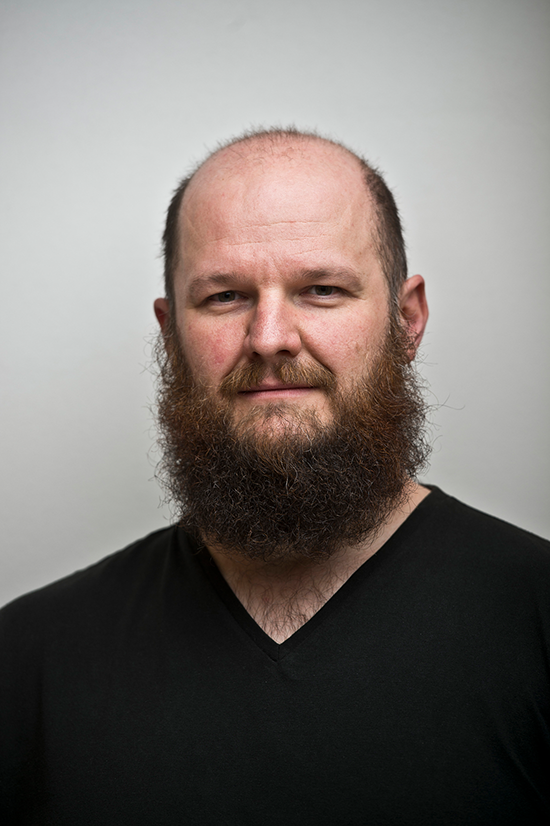
Ing. Robert Kaplánek, Ph.D. is a senior researcher at 1st Faculty of Medicine, Charles University in Prague/BIOCEV (Czech Republic) in the Laboratory of Medicinal Chemistry. He received his Ph.D. in Organic Chemistry at the University of Chemistry and Technology in Prague (Czech Republic). His expertise includes design and synthesis of novel compounds, their purification, and ther characterisation. His research is focused on metal chelators and derivatives of natural compounds as novel cytostatics, epigeneticaly active compounds, anti-Alzheimer’s, antimicrobial and antimycobacterial drugs as well as boron cluster compounds for biomedicinal applications. He is responsible for chemical synthesis of key boron-rich building blocks within the NuCapCure project.
- In NuCapCure you are ‘hijacking’ the tumour cell. Explain “activation from the inside out”
Designed and tested compounds do not display biological activity on their own; instead, they attract tumour cells to accumulate them. After their internalisation into cell organelles, subsequent irradiation activates them and these compounds kill the cancer cells.
- If you were pointing at a scan or graph, what would show “this is happening in the tumour, not the healthy tissue
Certain processes are typical for tumours, while others are characteristic of healthy tissue. Cancer cells are a little bit different to healthy ones: they grow and divide uncontrollably, show differences in cell cycle, lack specialization, have different size and shape etc. Additionally, some diagnostic methods can differentiate between healthy tissue and tumour tissue.
- Safety and selectivity in plain language: how do you check that we’re helping the patient’s brain, not stressing it?
During the treatment, we can observe progression in the healing process using diagnostic methods. In addition to an exclusive patient-friendly approach, the determination and analysis of stress markers can be employed.
- Timing matters. Without numbers, how do you decide when to trigger with protons/neutrons so the effect is maximised and collateral kept low?
It depends on the distribution of the tested compound in brain tissue. The ideal time for treatment by proton or neutron beam is when accumulation of therapeutic compounds in the tumour is at its maximum. Uptake of tested compounds by tumour cells can lead to fluorescence labelling of the target tissue, allowing us to select an appropriate time for triggering.
- How does imaging or an in-vivo readout teach and assist you in adjusting your plan and approach?
Imaging and in-vivo approaches show whether our idea is working (proof of principle) or can reveal why it did not work. Those methods allow us to check critical points of proposed treatment approaches, for example stability and toxicity of prepared compounds, their ability to cross blood-brain barriers and to penetrate into cells or accumulate in tumour tissue, their metabolic stability etc.
- Reproducibility for sceptics: What is your indication that a result can be reproduced and will hold up the next time?
A robust experimental plan, precise execution, and the correct application of statistical methods are essential for reproducibility. All experiments are always performed several times to verify the correctness and applicability of the used method, its effectiveness and reproducibility, and to eliminate incorrect conclusions.
- What’s one thing about glioblastoma research you wish more people understood and why?
Glioblastoma is a complex, but extremely aggressive disease. In current times, effective treatment of glioblastoma is unatainable. Research and development of completely new treatment methods is urgently needed. If not only researchers but society as a whole do not do their best, our chances of success are limited.